



Blockchain Governance Models: The Future of Decentralized Decision-Making
In an era where digital currencies and decentralized applications dominate the tech landscape, the importance of robust and effective governance models cannot be overstated. With over $4.1 billion lost to DeFi hacks in 2024 alone, understanding the intricacies of blockchain governance has become imperative for investors, developers, and users alike. This article delves into various blockchain governance models to help you understand their critical roles in shaping the digital asset ecosystem.
The Essence of Blockchain Governance
Blockchain governance refers to the frameworks and processes that determine how decisions are made on blockchain networks. Just like a well-structured corporation with a board of directors, blockchain networks require mechanisms to coordinate actions and develop protocols that protect the interests of all stakeholders.
- **Distributed Decision-Making:** Unlike traditional organizations, blockchain governance is often decentralized, allowing for a more democratic process.
- **Stakeholder Inclusion:** Various stakeholders, from developers to users, can participate in decision-making processes.
- **Transparency:** Every decision-making process is typically recorded on the blockchain, promoting trust and accountability.
Types of Blockchain Governance Models
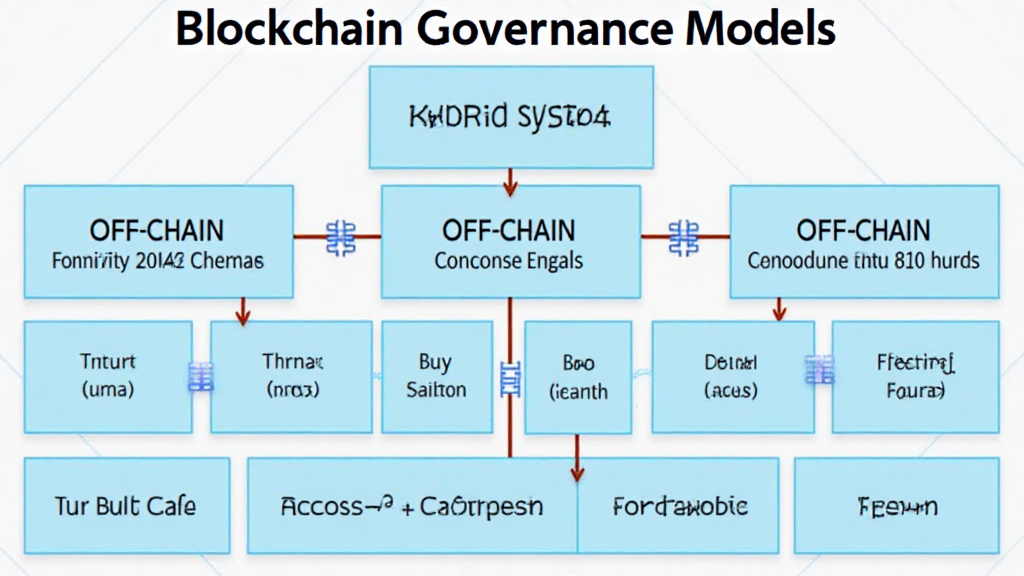
Understanding the different blockchain governance models can provide insights into how networks maintain consensus and evolve over time.
1. On-Chain Governance
On-chain governance refers to processes that occur directly on the blockchain, allowing stakeholders to participate actively in protocol changes. For example, voting mechanisms can be issued as smart contracts.
- **Pros:** Higher transparency, immediacy in decision-making.
- **Cons:** Vulnerability to voter manipulation.
2. Off-Chain Governance
Conversely, off-chain governance involves decision-making processes outside the blockchain, often relying on community meetings and discussions.
- **Pros:** More flexibility in adapting to changes.
- **Cons:** Lack of transparency and potential for centralization.
3. Hybrid Governance
A hybrid governance model combines elements of both on-chain and off-chain governance, effectively leveraging strengths from both approaches.
- **Pros:** Balanced approach to decision-making.
- **Cons:** Complexity in integrating both systems.
Consensus Mechanisms and Their Role in Governance
Consensus mechanisms are vital for governance as they define how transactions are verified and agreed upon within the network. Let’s examine some popular consensus algorithms:
Proof of Work (PoW)
PoW relies on computational power to solve complex mathematical problems, ensuring network security. However, scalability is a concern, limiting its governance capabilities.
Proof of Stake (PoS)
In PoS, validators are chosen based on the number of coins they hold and are willing to ‘stake’ as collateral. This means that governance becomes aligned with economic incentives.
Delegated Proof of Stake (DPoS)
This model empowers stakeholders to elect delegates who manage the network, creating a more efficient governance structure. However, it may risk centralization due to a smaller group of elected individuals.
Case Study: The Ethereum Governance Model
Ethereum employs a hybrid governance model alongside a community-based approach that includes stakeholders, developers, and miners all participating in protocol decisions.
- Inclusivity: Decisions are largely community-driven.
- Protocol Upgrades: Ethereum Improvement Proposals (EIPs) are the primary method for protocol upgrades.
Emerging Trends in Blockchain Governance
As blockchain technology continues to evolve, so do governance structures. Here are some emerging trends:
- Decentralized Autonomous Organizations (DAOs): DAOs represent a new governance paradigm where organizations are run by smart contracts with decision-making power vested in token holders.
- Regulatory Compliance: As governments start to impose regulations on cryptocurrencies and blockchain technologies, governance models will need to adapt. For instance, tiêu chuẩn an ninh blockchain becomes crucial.
- Education and Awareness: As the market grows, user education about governance and active participation in decision-making processes becomes pivotal for sustainable growth.
Technology Adoption in Vietnam: A Case Study
Vietnam is experiencing a significant increase in blockchain adoption, with more than 10% annual growth in crypto users. This expansion opens up opportunities for improved governance structures.
- Market Potential: The increasing number of blockchain startups in Vietnam creates diverse opportunities for innovative governance models.
- Community Engagement: Local communities are actively participating in discussions and initiatives around blockchain governance.
Conclusion: The Future of Blockchain Governance
As blockchain technology matures, effective governance models will play an essential role in the sustainability of digital assets. By understanding different governance types, stakeholders can make informed decisions that enhance security and innovation. Participate in governance processes to shape the future of the blockchain ecosystem, and remember to explore platforms like Suzukicoin to stay updated on the latest trends.
With a well-structured governance model in place, the blockchain landscape can thrive amid the challenges that come with its rapid evolution.
**About the Author**: John Smith is a blockchain governance expert with over 15 published papers on decentralized decision-making. He has led several high-profile audits for crypto projects and continues to advocate for robust governance standards in the industry.


