

Decentralized Autonomous Organizations: The Future of Digital Governance
With over $4.1 billion lost to DeFi hacks in 2024, the push for more secure and transparent organizational structures has never been more crucial. Enter Decentralized Autonomous Organizations (DAOs), a revolutionary concept in the blockchain space that offers a unique way to govern and manage digital assets collectively. As Vietnam sees a significant increase in crypto adoption, understanding DAOs will be essential for both investors and developers.
What are Decentralized Autonomous Organizations?
A DAO can be understood as a fully autonomous entity run by smart contracts. Unlike traditional organizations that rely on centralized leadership, DAOs function on the principles of decentralization, transparency, and community governance. Members of a DAO collectively make decisions, often through a voting mechanism that requires members to hold governance tokens.
- Decentralization: Eliminates single points of failure.
- Transparency: Allows all members to audit processes and decisions.
- Community-driven: Each member’s voice counts, promoting inclusiveness.
Importance of DAOs in the Crypto Ecosystem
DAOs have emerged as one of the most promising applications within the blockchain ecosystem. They not only facilitate operations in a decentralized manner but also enhance security measures. Here’s how DAOs add value:
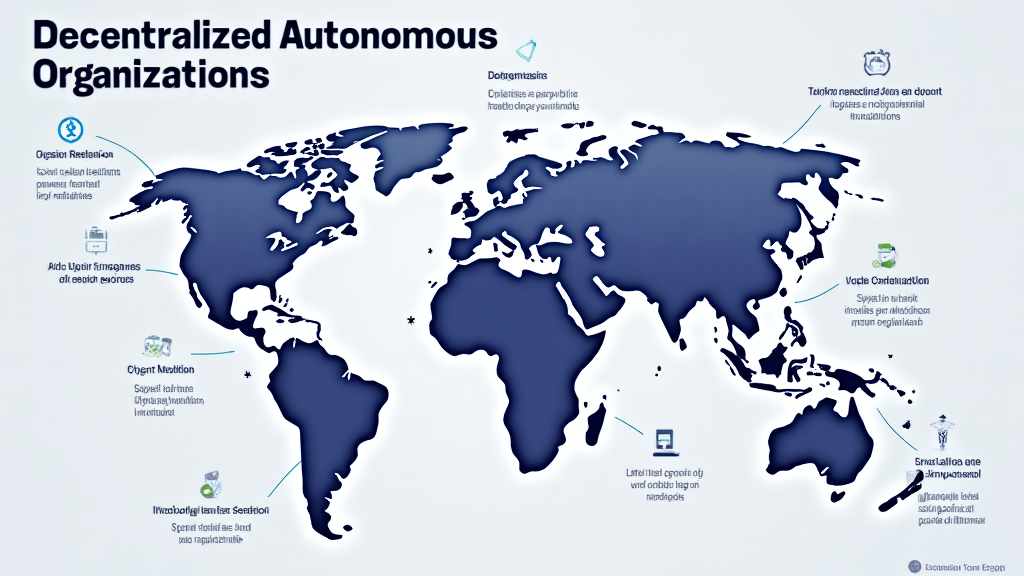
ong>Enhanced Security: ong> DAOs can minimize risks associated with centralized control. For instance, a DAO operating under a secure smart contract reduces the chances of hacks.ong>Operational Efficiency: ong> Automations through smart contracts streamline operations, reducing administrative overhead.ong>Community Governance: ong> Stakeholders can vote on proposals and changes, giving them a sense of ownership and responsibility.
Real-World Applications of DAOs
DAOs are not just a theoretical concept; they have practical applications across various sectors. Companies like MakerDAO and Uniswap exemplify successful implementations.
Case Study: MakerDAO
MakerDAO is a decentralized credit platform on the Ethereum blockchain that allows users to borrow the stablecoin DAI against their crypto assets. Decisions regarding the governance of the protocol are made by MKR token holders through a voting system.
Case Study: Uniswap
Uniswap transforms the landscape of decentralized trading through its automated liquidity protocol. Users determine upgrades and changes to the platform by voting, embodying the principles of a DAO.
Understanding Smart Contracts and Their Role in DAOs
The backbone of any DAO is its smart contract. These self-executing contracts come with the terms of the agreement directly written into code. They enable irreversible transactions, which improve trust among parties. Understanding how to audit smart contracts is crucial for the operational security of a DAO.
ong>Execute Transactions Automatically: ong> Once conditions are met, smart contracts trigger actions without the need for intermediaries.ong>Transparency and Verifiability: ong> All transactions are visible on the blockchain, reducing opportunities for fraud.ong>Cost Efficiency: ong> Reduces costs by minimizing the need for intermediaries.
Challenges Facing Decentralized Autonomous Organizations
While DAOs present exciting opportunities, they are not without challenges. Governance complexities, legal ambiguities, and vulnerability to manipulation are critical areas to consider.
Governance Issues
Achieving effective governance in a decentralized model can be complicated. For example, as seen in many DAOs, major decisions may be dominated by large token holders, sidelining the voices of average members.
Legal and Regulatory Challenges
The legal status of DAOs varies greatly by jurisdiction, leading to uncertainty in compliance and regulation. Questions arise such as:
- Are DAOs considered legal entities?
- How can disputes be resolved?
DAOs in Vietnam: A Growing Market
Vietnam is becoming increasingly important in the global blockchain landscape. According to recent data, the number of crypto users in Vietnam has grown significantly, with an estimated
This rapid growth in crypto adoption creates fertile ground for DAOs to thrive. Investors and developers in Vietnam have the opportunity to leverage this innovative governance structure to create more equitable and secure digital ecosystems.
Future Prospects of DAOs
The potential for DAOs extends beyond just the crypto space. They can redefine how organizations operate in various sectors including governance, philanthropy, and even supply chains.
ong>Governance: ong> Political and community organizations considering decentralized decision-making.ong>Philanthropy: ong> Donor-led DAOs can ensure that funds are allocated transparently to causes.
Conclusion
Decentralized Autonomous Organizations, or DAOs, are paving the way for a new form of digital governance. As the Vietnamese market continues to grow, understanding and implementing DAOs could provide substantial advantages for crypto enthusiasts and developers alike. Investing time in learning about DAOs will empower individuals with the tools they need to navigate the evolving landscape of decentralized finance.
For more insights and updates on the latest in decentralized finance, visit suzukicoin.
Author: Dr. Andrew Nguyen, a blockchain technology expert with over 20 publications in digital governance. He has led audits on multiple high-profile projects, contributing significantly to the field of cryptocurrency regulation.


